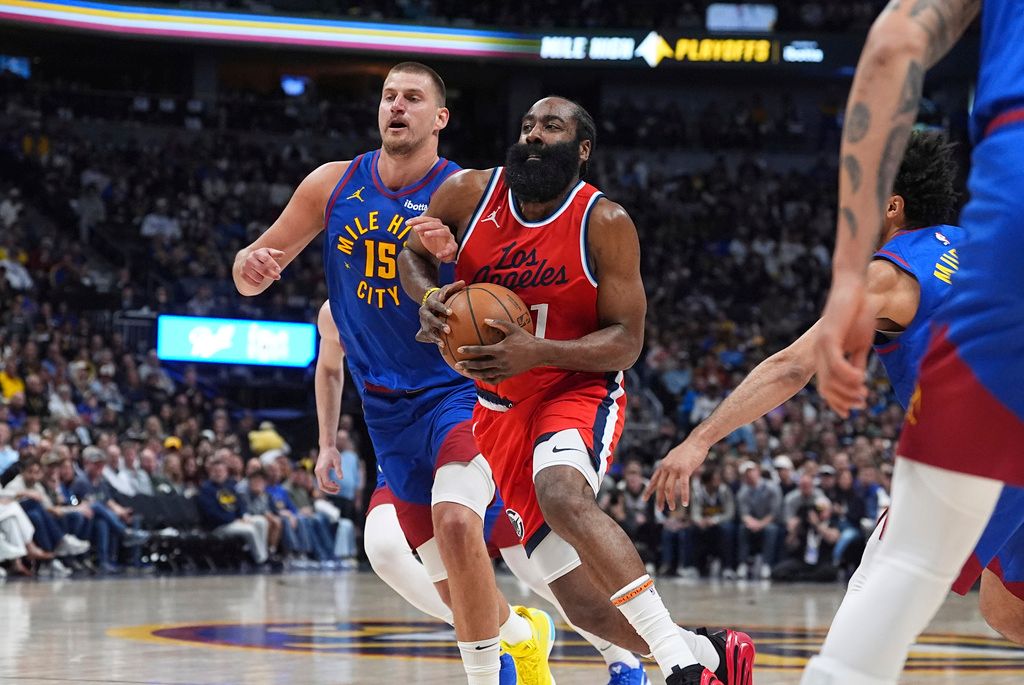




If you follow NBA injury reports or track player availability before games, you’ve likely seen GTD next to a player’s name. It’s a common designation that can impact lineups, rotations, and fantasy player stat decisions across basketball and other sports.
This article explains the GTD meaning, how it’s used in the NBA, and why it matters for fantasy sports fans who enjoy making player stat selections.
GTD Meaning: What Does GTD Stand For?
GTD stands for Game-Time Decision.
When a player is labeled GTD, it means their availability will be determined closer to the start of the game. Teams want to evaluate how the player feels during warmups or pregame testing before making a final call.
In simple terms:
- GTD indicates uncertainty
- The player may or may not play
- Official confirmation usually comes shortly before tipoff
What Does GTD Mean in the NBA?
In the NBA, GTD commonly appears under the Questionable injury designation. On most apps and injury reports, these two labels are effectively treated the same.
A GTD designation usually suggests:
- Minor injuries, soreness, or load management
- Teams being cautious during back-to-backs
- Final status depending on pregame movement and comfort
Because NBA roles are highly usage-dependent, a single GTD can influence:
- Minutes distribution
- Offensive opportunities for teammates
- Overall game flow
That’s why fantasy players monitor GTD updates closely leading up to game time.
Meaning of GTD in Basketball
While GTD is most often discussed in the NBA, the term applies across basketball:
- College basketball injury reports
- International leagues using English-language status updates
- Playoffs and tournaments, where teams delay disclosures
No matter the league, the meaning remains consistent: the player’s status will be decided at game time.
Why GTD Matters for Fantasy Player Stat Picks
GTD designations are especially important for fantasy contests that revolve around player stat selections.
A GTD player can affect:
- Whether you include that player in your lineup
- Which teammates may see expanded roles
- How you interpret late-breaking lineup news
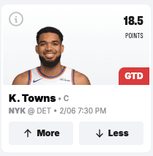
On the Splash Sports app, GTD players typically appear as Questionable, helping fantasy players quickly identify uncertainty before making their selections.
Example
Imagine Karl-Anthony Towns is listed as GTD for an upcoming Knicks vs. Pistons matchup, with a Points line of 18.5 displayed in the app. The GTD tag signals that Towns’ availability has not yet been confirmed and will be decided closer to tipoff.
In this situation, fantasy players know:
- Towns may play his normal role, reduced minutes, or not appear at all
- Final confirmation will likely come after warmups
- If Towns is ruled out, other Knicks players could see increased scoring opportunities
Seeing the GTD label helps fantasy participants decide whether to include Towns’ points stat or shift focus to teammates whose roles could expand depending on the final lineup. Monitoring updates leading up to game time is key when a GTD designation is involved.
How GTD Fits Into Fantasy Contests Like QuickPicks
Understanding GTD is an important part of playing fantasy contests built around player stat predictions.
In QuickPicks, fans use NBA knowledge to:
- Read injury situations accurately
- Anticipate role changes if a GTD player sits
- Adjust selections based on confirmed lineups
Fantasy players who follow availability updates closely often gain an edge when late news changes how minutes and opportunities are distributed.
If you’re new to the format, this guide on how to play QuickPicks walks through the basics.
Other Injury Designations vs GTD
Here’s how GTD compares to other common availability labels:
- Probable: Expected to play
- Questionable / GTD: True game-time call
- Doubtful: Unlikely to play
- Out: Will not play
Among these, GTD creates the most uncertainty, making it one of the most important designations to monitor for fantasy contests.
Final Thoughts
So, what does GTD mean?
It stands for Game-Time Decision, and in basketball, it signals that a player’s availability won’t be confirmed until shortly before the game begins.
For NBA fans and fantasy players alike, understanding GTD helps you stay informed, react to late updates, and make smarter player stat selections.